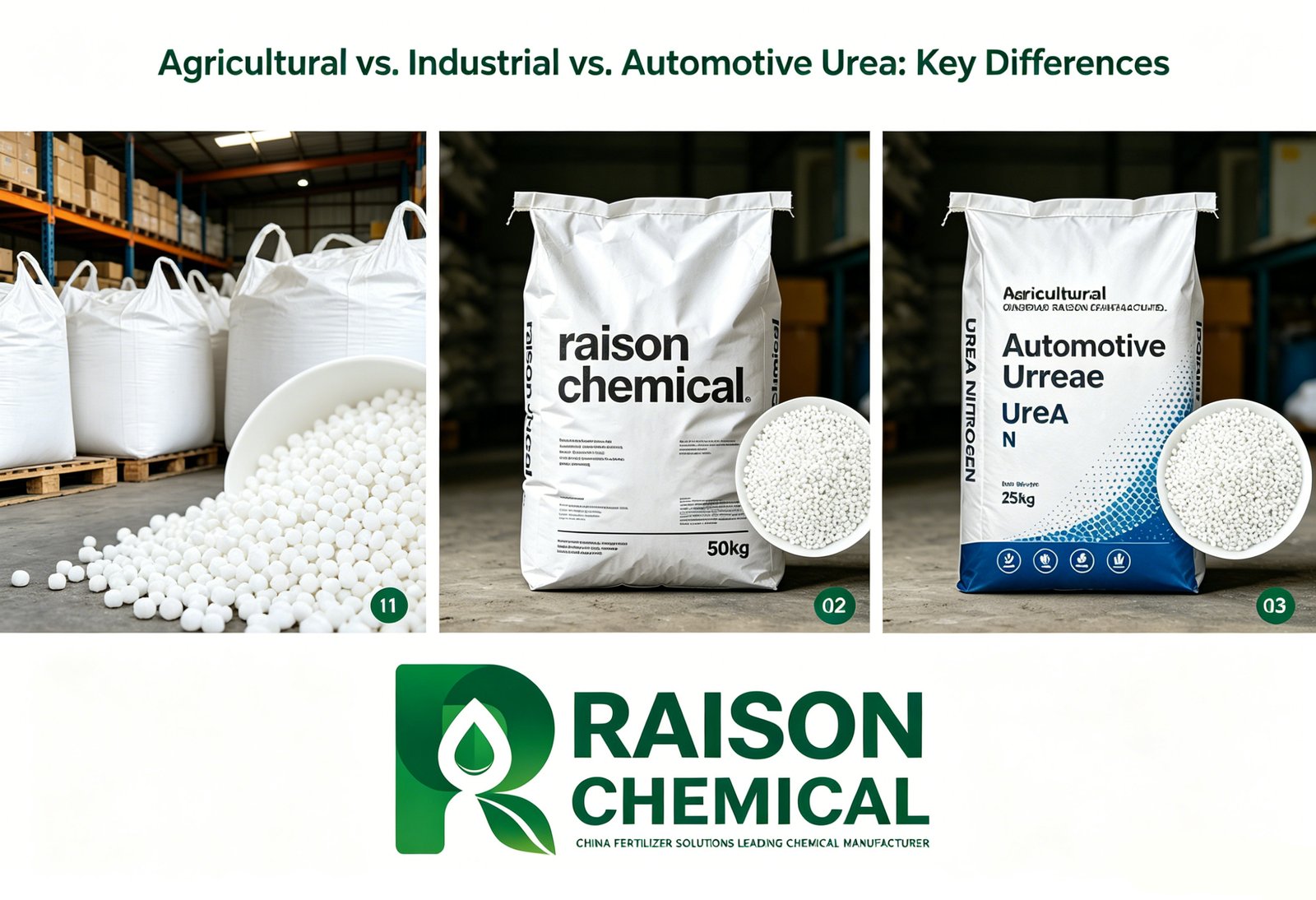
Understanding the critical distinctions between these three grades of urea is essential for compliance, efficiency, and cost control.
To the untrained eye, urea is just urea. The chemical formula is the same—CO(NH₂)₂—and the nitrogen content hovers around 46%. However, in the world of international standards and industrial applications, Agricultural Urea, Industrial Urea, and Automotive Grade Urea (raison®) occupy three completely different lanes. Using the wrong grade can lead to clogged SCR injectors, catalyst failure, production downtime, or environmental penalties.
This article breaks down the technical differences to help you select the right product for your needs.
1. The Foundation: Same Molecule, Different Purity
All urea products share the same core molecule (Carbamide). The difference lies entirely in the impurity profile. Trace elements like biuret, aldehydes, water-insoluble matter, and metal ions determine whether a batch is suitable for a farm, a factory, or a heavy-duty truck.
2. Agricultural Urea: The Standard Grade
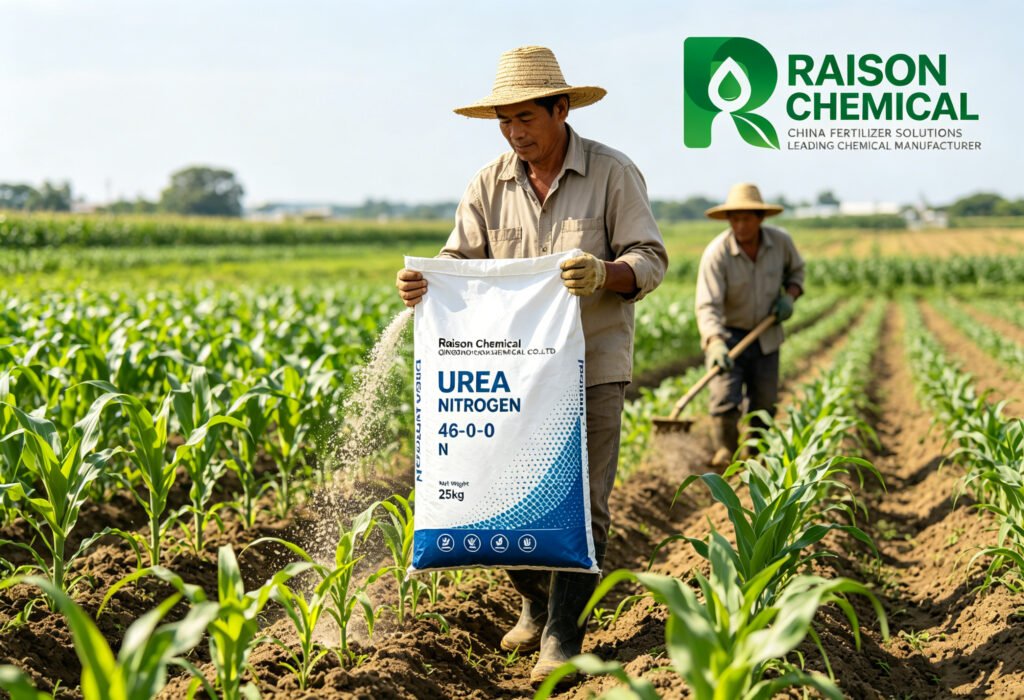
Agricultural urea primarily follows standards like GB/T 2440-2017 (China) or ISO 15960. Its main selling point is high nitrogen content at a competitive price.
-
- Key Metrics: Nitrogen content ≥ 46.2%; Biuret ≤ 0.9% – 1.0%.
- The Catch: Standards generally do not restrict iron, alkalinity, or water-insoluble content because these have minimal impact on soil.
- Common Use: Primarily as a nitrogen fertilizer. It is also used in livestock feed additives (ruminants).
- ⚠️ Warning: Modern slow-release agricultural granules often use formaldehyde-based coatings. These are strictly forbidden in industrial and automotive applications.
3. Industrial Urea: The Refined Base
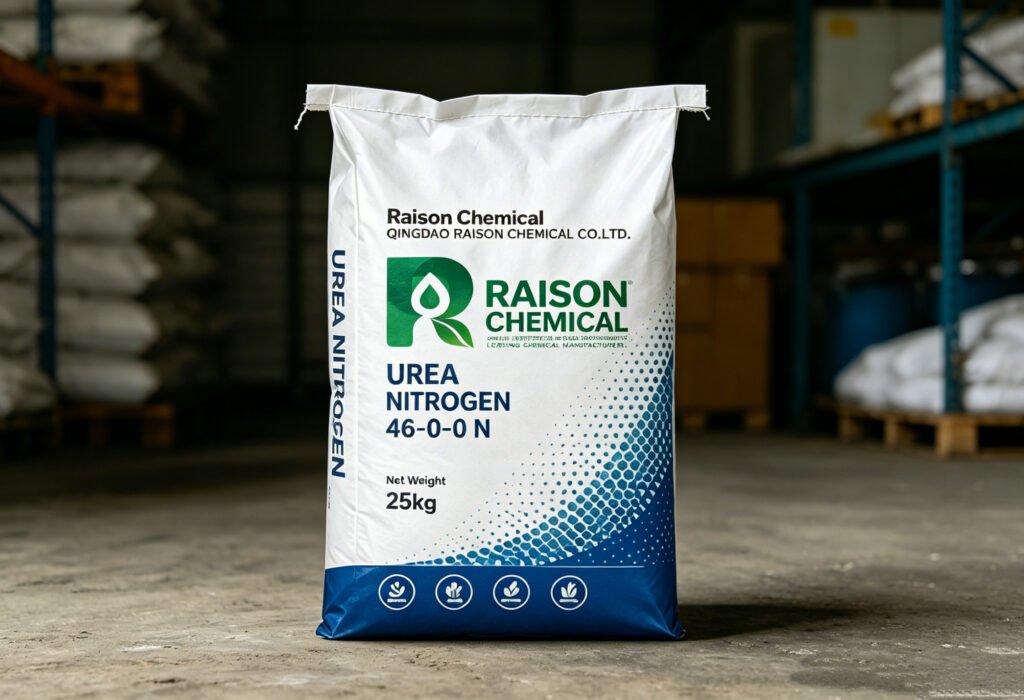
Industrial urea adheres to stricter standards (HG/T 3997-2020 or specific enterprise standards). It serves as a raw material for chemical synthesis where impurities cause side reactions.
- Key Metrics: Biuret is capped lower (typically ≤ 0.5% for top-grade), with strict limits on iron (≤ 0.0005%) and water-insoluble matter.
- Why it matters: High biuret levels can ruin the polymerization process in resin manufacturing or poison catalysts in flue gas treatment.
- Common Uses:
- Urea-Formaldehyde (UF) Resins: Used in wood-based panels and adhesives.
- Melamine Synthesis: A precursor for advanced plastics and laminates.
- Flue Gas Denitrification (DeNOx): Used in power plants and industrial boilers.
- Feedstock: The primary raw material for producing Automotive Grade Urea.
4. Automotive Grade Urea (AUS 32 / AdBlue®)
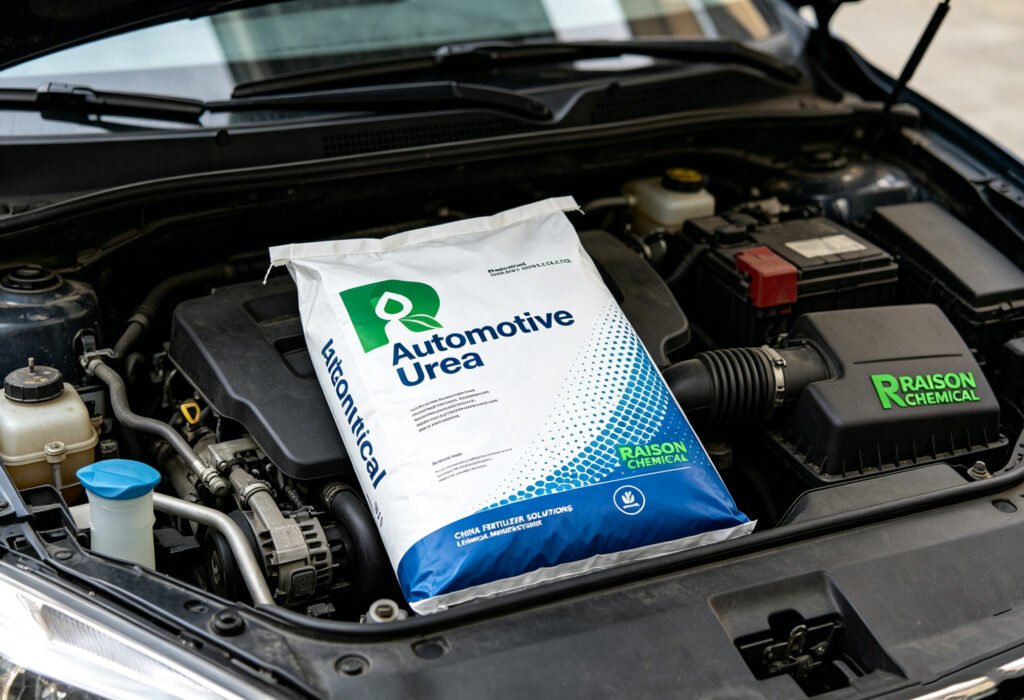
This is the “ultra-pure” category. It is not a solid; it is a 32.5% aqueous solution of high-purity urea in demineralized water, known officially as AUS 32. It complies with ISO 22241 and GB 29518-2013.
- The 32.5% Rule: This specific concentration provides the lowest freezing point (-11°C). Any deviation causes premature crystallization, risking pipe blockages in winter.
- Extreme Purity: It requires hydrolysis and recrystallization of industrial urea to remove trace metals and contaminants.
- Critical Limits:
- Biuret: ≤ 0.3%
- Aldehydes: ≤ 5 ppm
- Insolubles: ≤ 20 ppm
- Metal Ions (Ca, Fe, Cu, etc.): ≤ 0.2 – 0.5 ppm
- Common Use: Selective Catalytic Reduction (SCR) systems in Euro IV, V, and VI diesel engines (heavy trucks, buses, construction machinery).
5. Comparison Table: At a Glance
| Feature | Agricultural Urea | Industrial Urea | Automotive Urea (AUS 32) |
|---|---|---|---|
| Form | Solid Granules | Solid Granules | 32.5% Liquid Solution |
| Primary Standard | GB/T 2440 | HG/T 3997 / GB/T 2440 | GB 29518 / ISO 22241 |
| Biuret Content | ≤ 0.9% – 1.0% | ≤ 0.5% – 1.0% | ≤ 0.3% |
| Iron Content | Not Required | ≤ 5 mg/kg | ≤ 0.5 mg/kg |
| Aldehydes | Not Required | Not Required | ≤ 5 mg/kg |
| Main Application | Fertilizer | Resins, Melamine, DeNOx | SCR Emission Control |
6. Common Procurement Mistakes
- “Diluting Agricultural Urea makes AdBlue.” False. Agricultural grades contain high levels of biuret and aldehydes that will permanently damage expensive SCR catalysts.
- “Industrial Urea is good enough for vehicles.” False. Even “first-grade” industrial urea has biuret levels 3x higher than what automotive standards allow.
- “Storage doesn’t matter.” False. AUS 32 must be stored in sealed, dedicated containers away from direct sunlight (optimal temp: -5°C to 25°C) to prevent algae growth and hydrolysis.
7. Sourcing Quality Urea
Selecting the correct urea grade is a balance of application requirements and regulatory compliance. While agricultural fields demand nutrient density, industrial processes require chemical stability, and the automotive sector demands ultra-high purity.
Need a reliable supply of Industrial or Automotive Grade Urea?
Raison Chemical provides high-quality raw materials compliant with international standards. Contact our technical team today to discuss your procurement needs.
📧 Email: [LAXENRSCHEMICAL@GMAIL.COM]
🌐 Website: [RAISONCHEMICAL.COM]