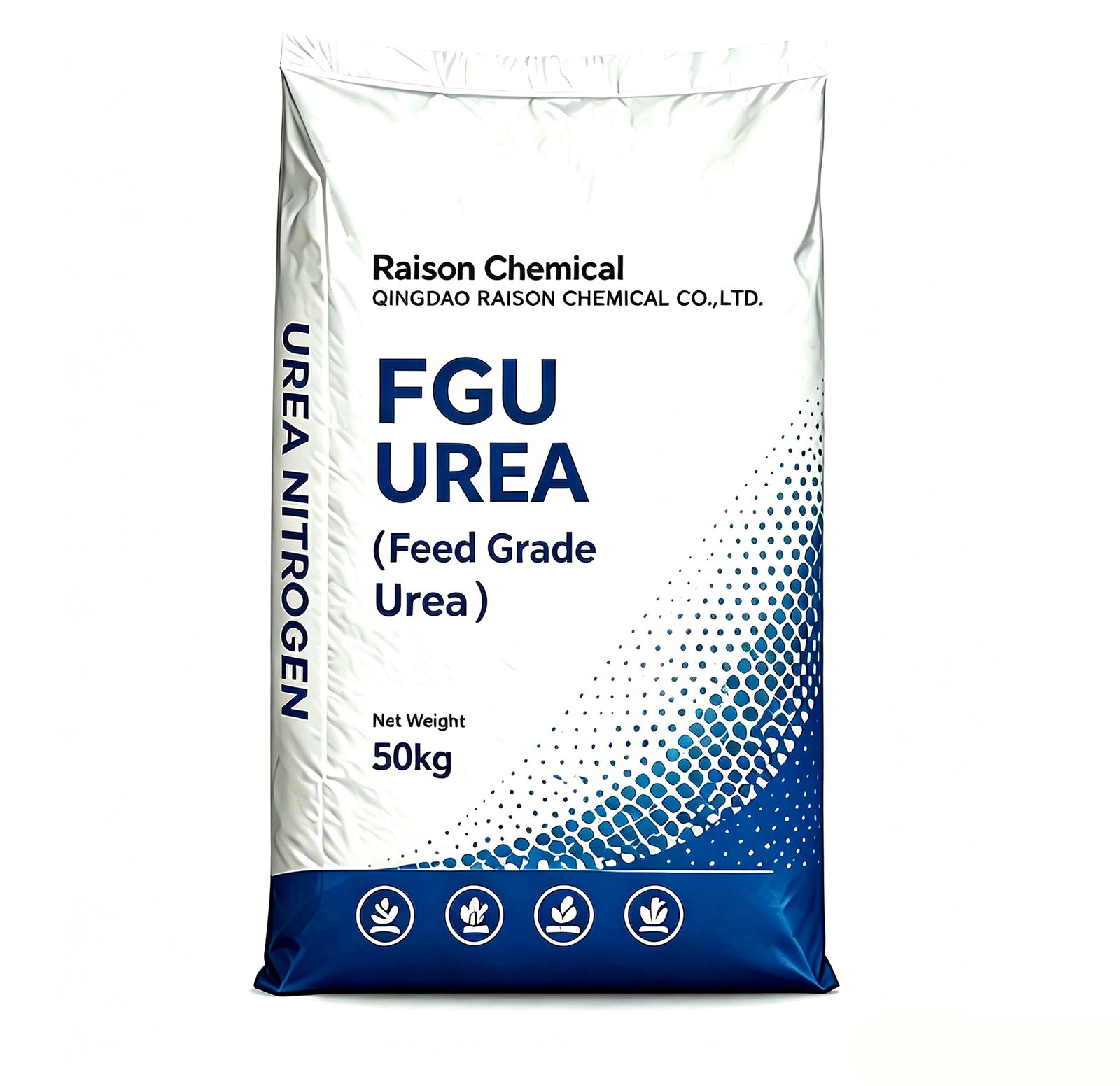
| Chemical Name | Raison Feed Grade Urea / Carbamide (FGU) |
| Chemical Formula | CO(NH₂)₂ (CH₄N₂O) |
| CAS No. | 57-13-6 |
| EINECS No. | 200-315-5 |
| HS Code | 3102.10.00 (Urea, whether or not in aqueous solution) |
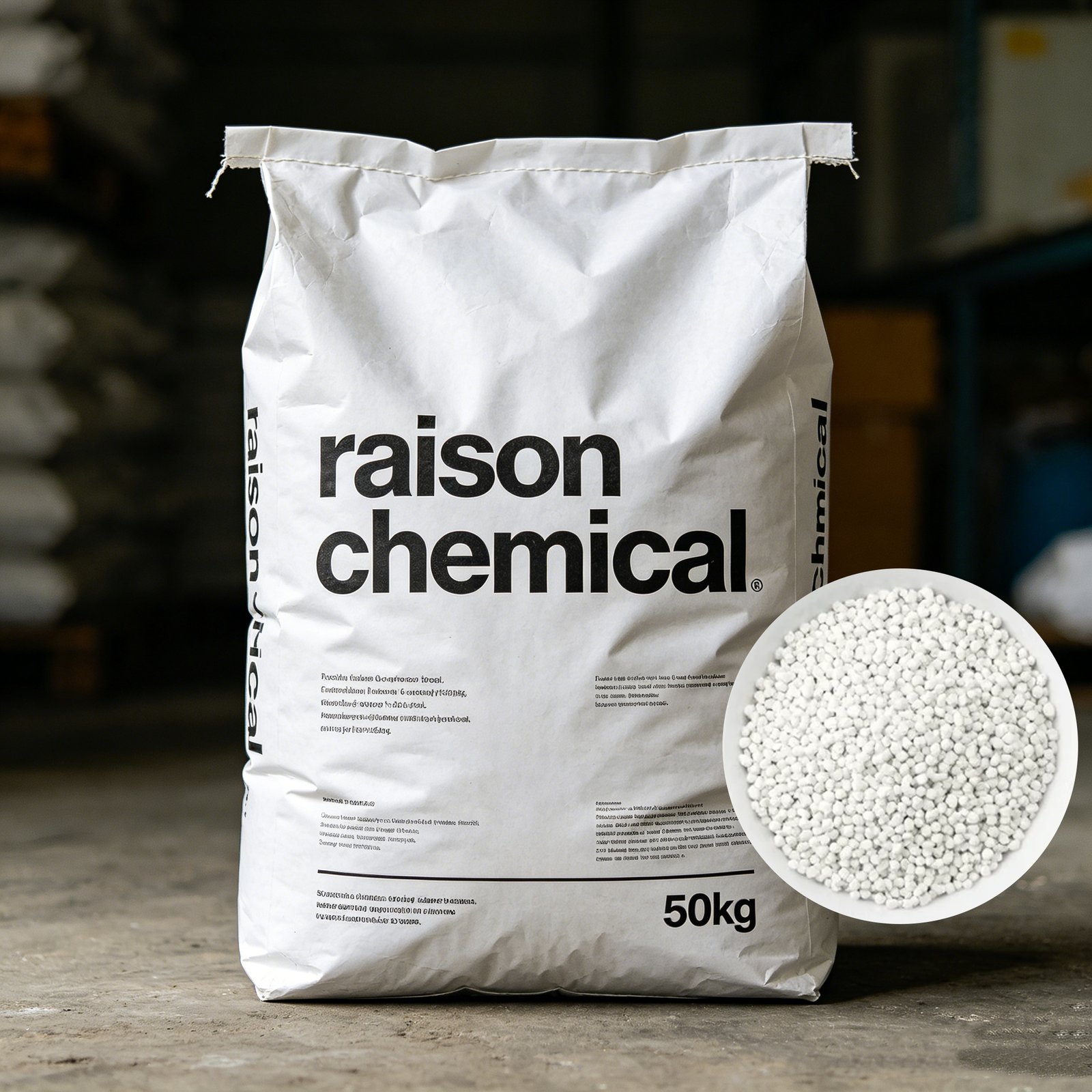
| Appearance | White, free-flowing prilled granules |
| Grade | Feed Grade (Non-Protein Nitrogen Source) |
| Nutrient Composition | 46 – 0 – 0
∟ Total Nitrogen (N): ≥ 46.0% ∟ Equivalent Crude Protein: ~288% ∟ Biuret: ≤ 1.0% (Feed-Safe) |
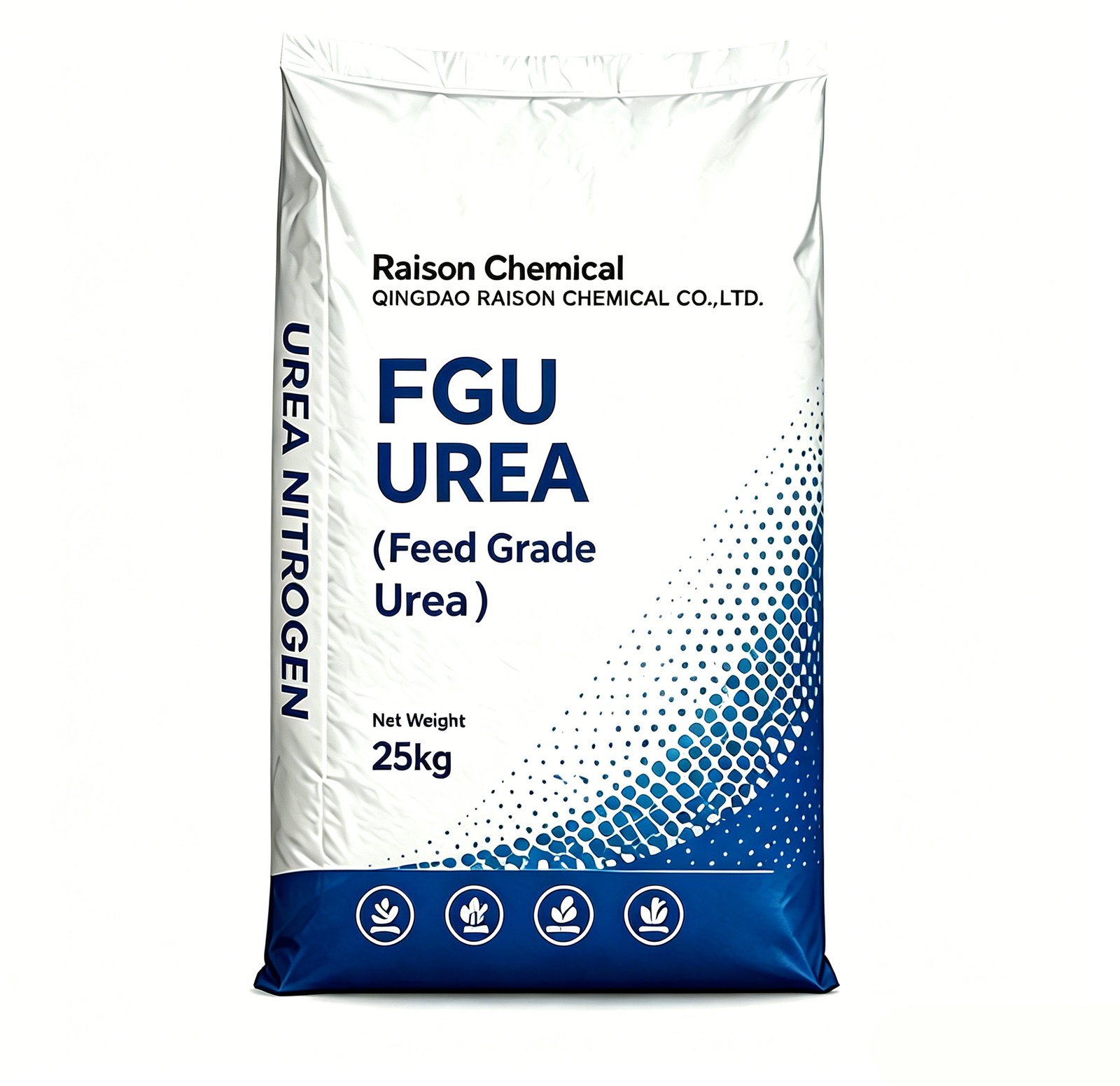
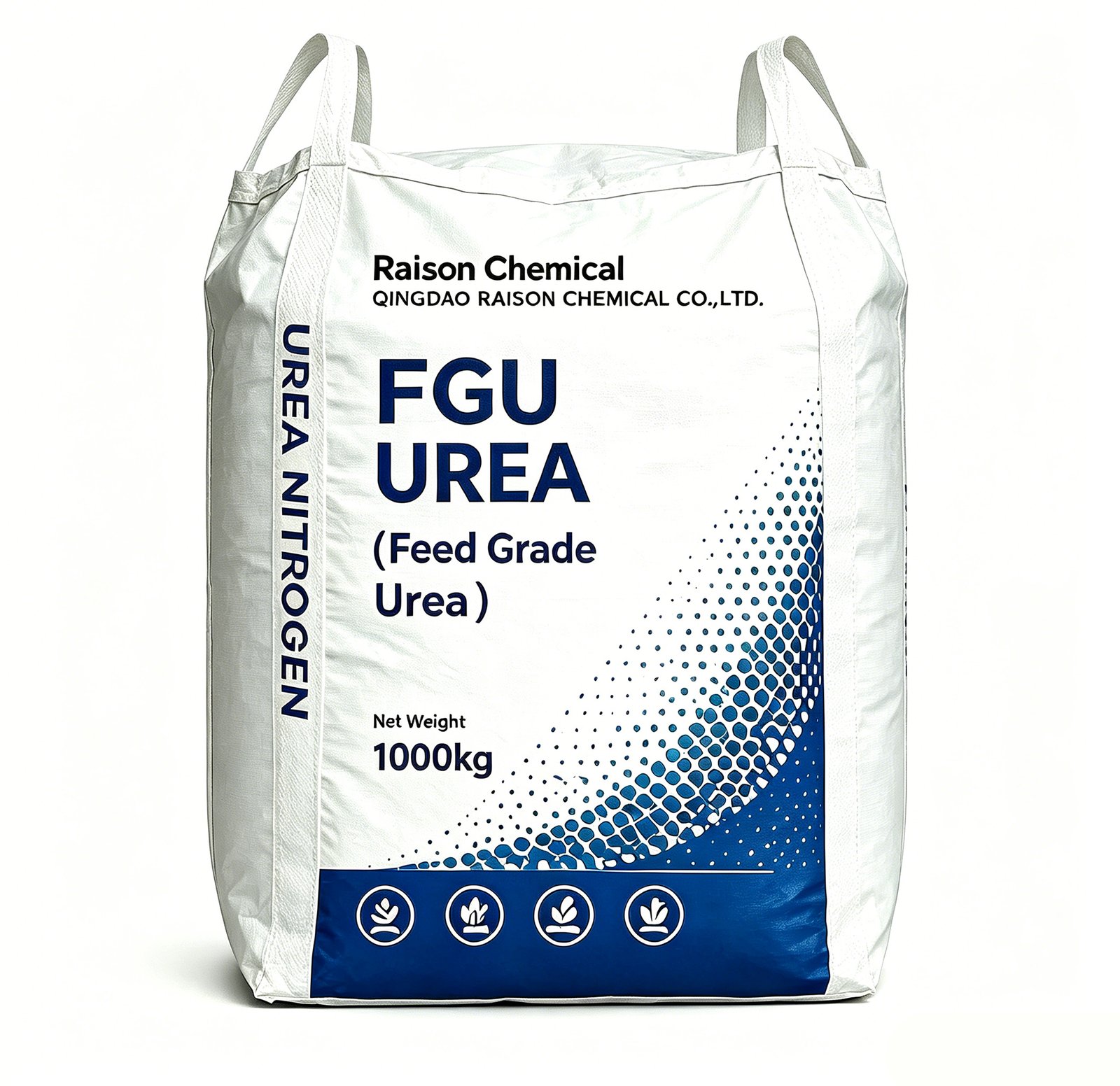
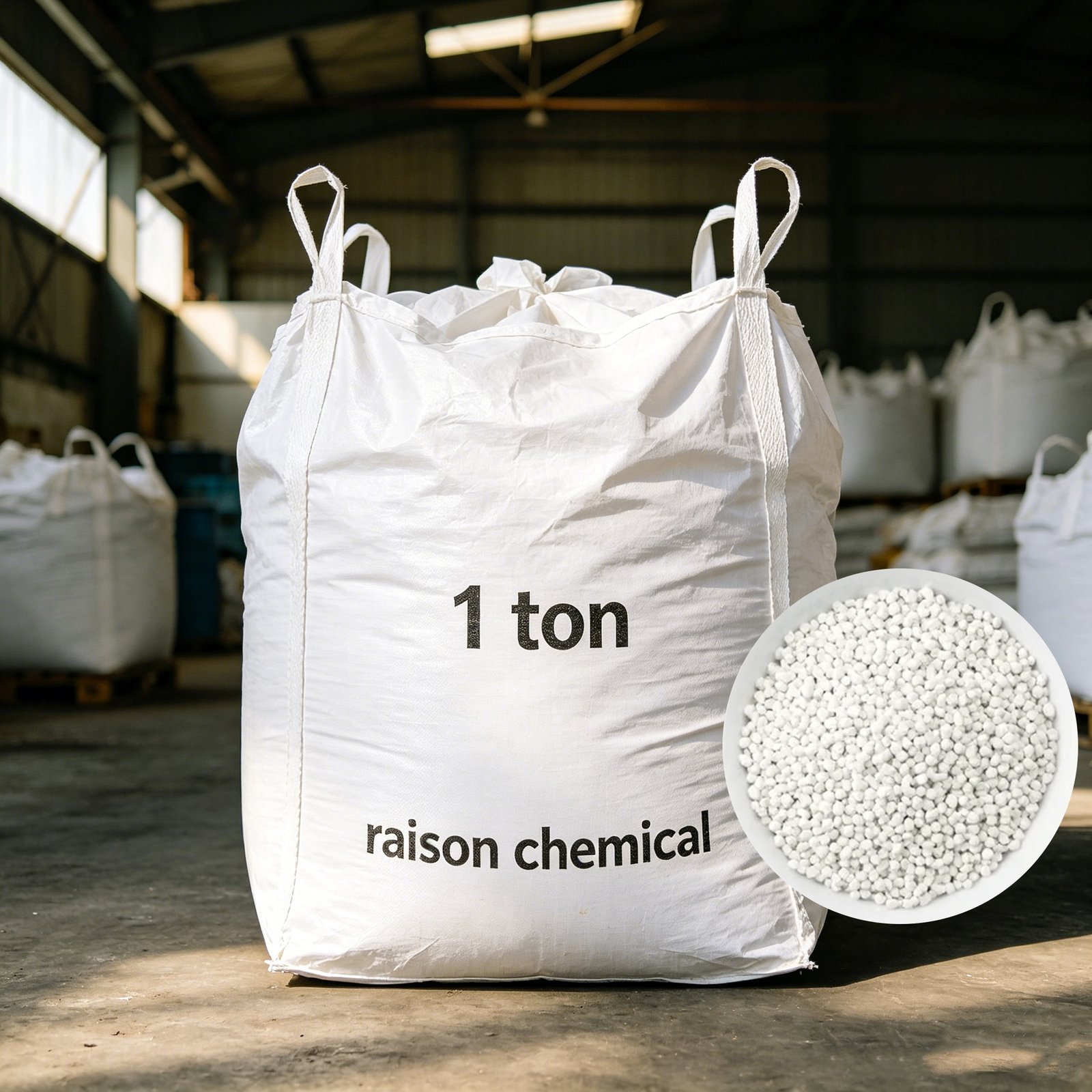
| Packaging | 25 kg / 50 kg moisture-proof PP bags, 1000 kg Jumbo bags, or Bulk on request |
| Certificate / Standard | ISO 22241-1, GMP+, HACCP, SGS / CIQ Inspected |
Products
Feed Grade Urea 46-0-0
PRODUCTS

- Product Specialist
- Phone:+86 18766652660
- WhatsApp:+8618766652660
- Email:Eva@raisonchemical.com
CONTACT US
Feed Grade Urea (FGU) 46-0-0 Product Description
Raison Chemical —— Feed Grade Urea (FGU, Carbamide) is a high-purity non-protein nitrogen (NPN) supplement engineered exclusively for ruminant nutrition. With a guaranteed ≥ 46.0% nitrogen content — equivalent to ~288% crude protein — it serves as a cost-effective, reliable alternative to expensive true-protein sources like soybean meal and cottonseed meal. Manufactured under stringent feed-safety protocols with biuret tightly controlled at ≤ 1.0% (Premium ≤ 0.6%), Raison FGU delivers uniform, free-flowing prills that blend seamlessly into TMR (Total Mixed Ration), feed premixes, and mineral blocks. Trusted by feed mills, integrators, and livestock producers worldwide, it is the backbone of modern ruminant protein strategy for dairy cattle, beef cattle, sheep, and goats.
Technical Specifications Table
| Parameter | Specification | Test / Standard |
| Total Nitrogen (N) Content | ≥ 46.0% (Equivalent Crude Protein ~288%) | ISO 5315 / AOAC |
| Biuret Content | ≤ 1.0% (Premium: ≤ 0.6–0.9%) | Spectrophotometric |
| Moisture Content | ≤ 0.5% | Oven Dry Method |
| Free Ammonia (NH₃) | ≤ 160 p.p.m. | Titration |
| Particle Size | 0.85 – 2.8 mm (Prilled, 90% min) / 2–4 mm (Granular on request) | Sieve Analysis |
| Appearance | White, free-flowing prilled granules; no visible foreign matter | Visual |
| Colour | White to slightly off-white | — |
| Odour | Odourless | — |
| Bulk Density | 0.72 – 0.78 kg/L (Prilled) | ISO 913 |
| Solubility in Water | ~1080 g/L at 20°C (fully miscible) | — |
| Heavy Metals | Within feed-grade limits (Pb, As, Cd compliant) | ICP / AOAC |
| Radiation | Non-radioactive | — |
Key Benefits of Raison Feed Grade Urea (FGU)
1. High-Efficiency NPN Source (~288% Equivalent Crude Protein)
Each unit of FGU delivers nitrogen equivalent to ~288% crude protein, allowing partial replacement of expensive true-protein feeds (soybean meal, cottonseed meal, canola meal). Rumen microbes convert urea-N into microbial protein, which is then digested by the animal — a proven strategy to cut feed costs by 15–30% without sacrificing performance.
2. Feed-Safe Low Biuret (≤ 1.0%, Premium ≤ 0.6%)
Biuret is a urea by-product that, at high levels, reduces palatability and interferes with rumen microbial protein synthesis. Raison FGU strictly controls biuret to ≤ 1.0% (with a Premium ≤ 0.6–0.9% option), ensuring rumen health and consistent intake.
3. Uniform Prilled Granules for Perfect TMR Blending
Fine, consistent prill size (0.85–2.8 mm) ensures even distribution in TMR mixers and premix batches — no segregation, no “hot spots” of over-consumption. The prilled form also dissolves faster in the rumen, supporting rapid but manageable ammonia release when paired with fermentable carbs.
4. Heavy-Metal Controlled & Fully Documented
Every batch is tested for Pb, As, Cd to meet feed-additive regulations (EU EFSA-approved NPN status; GMP+/HACCP compliant). Shipped with full COA, MSDS, and third-party inspection — hassle-free customs for feed import markets.
5. Versatile Inclusion Formats
Perfect for TMR systems, feed premixes, mineral/vitamin blocks, and protein supplements for dairy cattle, beef cattle, sheep, and goats. Can be blended with molasses, grain, or silage bases.
6. Moisture-Proof Packaging for Feed Mills
25 kg / 50 kg laminated PP bags (moisture-proof), 1000 kg UV-stabilized jumbo bags, or bulk. Bags are coded for batch traceability — critical for feed safety audit trails.
At-a-Glance Specs (For Quick Reference)
| Feature | Raison Standard |
| Total Nitrogen (N) | 46% Min |
| Equivalent Crude Protein | ~288% |
| Biuret | ≤ 1.0% (Low, Feed-Safe) |
| Moisture | ≤ 0.5% |
| Form | Prilled (0.85–2.8 mm) / Granular on request |
| Grade | Feed Grade (Non-Protein Nitrogen Source) |
| Origin | China (Shandong/Qingdao) |
| Documents | COA, MSDS, GMP+/HACCP, SGS, CO |
Application Methods
Broadcasting: Spread evenly across the soil surface using calibrated spreaders. For conventional tillage, incorporate into the top 5–10 cm of soil with light harrowing within 24 hours to initiate moisture penetration. In no-till systems, apply immediately before rainfall (>10mm) or irrigate within 12 hours. Ideal for pre-plant basal application in broadacre cereals, pastures, and oilseed crops.
Side-Dressing / Banding: Place fertilizer 5–10 cm beside and 5 cm below the seed row. Unlike conventional urea, SCU has minimal burn risk, but proper placement ensures root interception as the coating activates. For corn, apply at the V6–V8 growth stage; for winter cereals, apply at tillering to early stem elongation; for perennial pastures, apply after each grazing or cutting cycle.
Starter / Pop-Up Fertilizer: SCU is exceptionally safe for in-furrow applications due to its low salt index and controlled release. Place 2–5 cm beside and below the seed to provide steady nitrogen and sulfur to developing seedlings without osmotic shock or ammonia toxicity.
Fertigation (Surface Irrigation Only): SCU granules are NOT RECOMMENDED for drip/micro-sprinkler systems — granules will clog emitters and filters. For flood irrigation or pivot systems with drop tubes, broadcast granules onto the field surface and wash into the soil profile with moving water. Do not inject granules into pressurized irrigation lines.
Foliar Spray: STRICTLY PROHIBITED. SCU is formulated exclusively for soil application. The sulfur coating and urea core will not dissolve in spray tanks, causing severe equipment clogging and irreversible leaf burn (phytotoxicity) if applied to foliage.
Precautions & Best Practices
Soil Temperature Dependency: Release rates are directly tied to soil temperature. In cold soils (<10°C), release slows significantly; in hot soils (>25°C), release accelerates. Adjust early-spring application rates upward if soil temperatures remain consistently low.
Soil Moisture Requirement: Moisture must penetrate the sulfur coating to dissolve the urea core. In soils with <40% field capacity, release will be negligible. Ensure adequate pre-application irrigation or time application before forecast rainfall.
Storage: Store in a cool, dry, well-ventilated warehouse with relative humidity <70%. Stack bags on wooden pallets (max 10 layers high) to prevent ground moisture wicking. Keep bags sealed until use and implement a FIFO (First-In-First-Out) inventory system.
Handling & Mixing: Avoid excessive mechanical handling that fractures the sulfur coating — damaged granules lose controlled-release properties. Physically compatible with MAP, DAP, potash, and TSP, but never mix with lime/limestone products, which accelerate coating degradation. Conduct a jar test before blending with pesticides.
Environmental Protection: Avoid application to frozen/snow-covered ground (nutrients leach during thaw) or within 10 meters of water bodies. Do not apply during heavy rainfall (>25mm/day) to prevent runoff.
Safety: Wear nitrile gloves, N95 dust masks, and safety goggles during handling. Sulfur dust is combustible in confined, high-concentration atmospheres — keep away from open flames or ignition sources. Wash exposed skin thoroughly after use.
TMR Formulation Calculator & Feeding Guidelines
Quick Conversion Factor
1% inclusion of Raison FGU 46-0-0 = 2.875% equivalent crude protein (46% N × 6.25 standard CP conversion factor)Simple Formulation Formula
Required FGU (g/head/day) = (Target CP reduction from true protein × Daily DM intake (kg)) / 2.875
1% inclusion of Raison FGU 46-0-0 = 2.875% equivalent crude protein (46% N × 6.25 standard CP conversion factor)Simple Formulation Formula
Required FGU (g/head/day) = (Target CP reduction from true protein × Daily DM intake (kg)) / 2.875
Example: For a lactating cow with 20kg daily DM intake, replacing 0.5kg CP from soybean meal:
FGU required = 0.5kg CP / 2.875 = 0.174kg (174g) FGU per head per day
Inclusion rate = (0.174kg / 20kg DM) × 100 = 0.87% of total ration DM
| Animal Category | Production Stage | Recommended FGU Inclusion (% of DM Ration) | Max Daily Allowance (g/head) | Required Fermentable Carbs (% of DM) |
|---|---|---|---|---|
| Lactating Dairy Cows | Early/Mid Lactation | 0.5–1.2% | 250g | ≥25% |
| Beef Finishing Cattle | Finishing Phase (>350kg) | 0.8–1.5% | 300g | ≥28% |
| Growing Beef Heifers | 200–350kg Body Weight | 0.4–1.0% | 200g | ≥22% |
| Ewes | Late Gestation/Lactation | 0.3–0.8% | 80g | ≥20% |
| Goats | Lactating/Growing | 0.4–1.0% | 100g | ≥22% |
Critical Safety & Formulation Rules for Feed Mills
- Ruminant-Only: FGU is strictly for animals with functional rumens.
NEVER feed to monogastrics (pigs, poultry, horses, fish, pets) – fatal toxicity risk. - Max Inclusion Limit: Never exceed 1.5% of total ration DM for any ruminant category to avoid acute ammonia toxicity.
- Carbohydrate Sync: Always pair FGU with readily fermentable carbs (grains, molasses, high-moisture corn). Insufficient carbs cause rumen ammonia spikes.
- Gradual Introduction: Increase FGU dosage over 21 days (25% → 50% → 100% target) to allow rumen microbial adaptation.
- Protein Replacement Cap: FGU can replace up to 30–40% of total ration crude protein from true protein sources (soybean meal, cottonseed meal) maximum.
- Traceability: Batch-code all FGU-containing premixes/TMRs per feed safety audit requirements. Include clear “Not for Monogastric Use” labeling on all finished feeds.
Packing&Shipping
| Packaging Type | Weight Options |
|---|---|
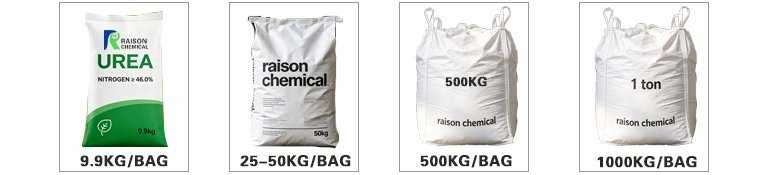
| Woven PP Bags | 9.9 kg, 50 kg |
| Jumbo Bags | 1000 kg (1 MT) |
| Bulk Delivery | Available upon request |
1) What products does Raison Chemical mainly supply?
A: We focus on two core categories:
Agricultural fertilizers: Urea (46% N, prilled/granular), NPK compound fertilizers, Potassium Nitrate (technical/agri grade) and related potash/blended fertilizers.
Industrial & hazardous chemicals: organic peroxides/initiators (MEKP, BPO, etc.), corrosive chemicals (e.g. Caustic Soda flakes/liquid, acids), and associated inorganic salts/industrial materials.
We position ourselves as an integrated supplier covering sourcing, quality check, repacking/labeling, warehousing coordination and export documentation.
2) Are your chemicals “genuinely compliant” for export? What documents do you provide?
Q: How do you guarantee compliance and smooth customs clearance?
A: Compliance is non-negotiable in our segment. For each shipment we can prepare the standard export document set required by most importers:
COA / MSDS(SDS) per batch
Certificate of Origin
Commercial Invoice / Packing List
When needed: SGS/third-party inspection, quantity & quality reports, and additional certificates (depending on destination & product)
For hazardous goods (DG), we work within the required DG framework: proper UN marking, DG declarations, and DG-class aware logistics booking from Qingdao/Shanghai/Tianjin.
3) Potassium Nitrate is a controlled / hazardous product—can you legally supply and export it?
A: Yes—KNO₃ is part of our handled range, but we treat it as what it is: a 5.1 oxidizer and a controlled/regulated item in many jurisdictions. We only offer it when the inquiry matches a lawful end-use and the buyer can work with proper DG procedures (correct documentation, compliant packaging, and DG-capable carriers). If you are unsure about your local import permit/license path, tell us your country & HS code requirement and we’ll align the paperwork accordingly.
4) Do you support custom packaging / OEM private labeling?
A: Yes. Common options include 25 kg / 50 kg PP woven + PE inner, and FIBC/Jumbo bags (500/1000 kg). We can arrange OEM bag printing (your logo, multi-language labels, lot/batch info). For hazardous items, any “custom pack” must still respect DG/UN packaging rules—so we’ll confirm which artwork/labels are feasible before production.
5) What are your typical lead times and shipping ports?
A: After deposit & artwork confirmation (if any), typical windows are roughly:
In-stock / spot arrangements: 7–15 days to readiness
Made-to-order / special specs / OEM bags: 15–30 days (depends on spec, inspection, DG queue)
Main export gateways: Qingdao / Shanghai / Tianjin, chosen by cargo type, container equipment and routing cost.
6)What is your MOQ and payment terms?
A: For most lines we quote against 1×20ft FCL as the practical MOQ (to keep unit cost & logistics sane). Smaller LCL lots are possible case-by-case—especially for DG where carriers/permits drive feasibility.
Payment norm: T/T (30% deposit + 70% against copy docs / BL); other terms discussed per client profile & inspected track record.
7) Can I get samples before placing a full container order?
A: Yes. We can arrange small representative samples (often courier / local express) for your lab check. For hazardous items, sample channel must follow DG courier rules—sometimes that means higher cost or an alternative arrangement. Sample cost & freight are usually on buyer’s account; refundable against first container in many cases.
Leave Your Message
Still not sure which spec/pack fits your market? Contact Raison Chemical with your destination country, HS code and monthly volume—we’ll propose a compliant plan and lead time.
Why Choose Raison® Chemical
· Licensed DG Exports – Full permits, zero compliance risks.
· Integrated Supply – Agro & industrial chemicals, one source.
· Certified Quality – SGS/ISO assured with full COA/SDS.
· Qingdao Logistics – Faster shipping, lower freight costs.
· Flexible Packaging – OEM branding tailored to your market.